





Dapat Isa Lang Digital Relaunch at ADDU Targets 110,000 Davao Signatures
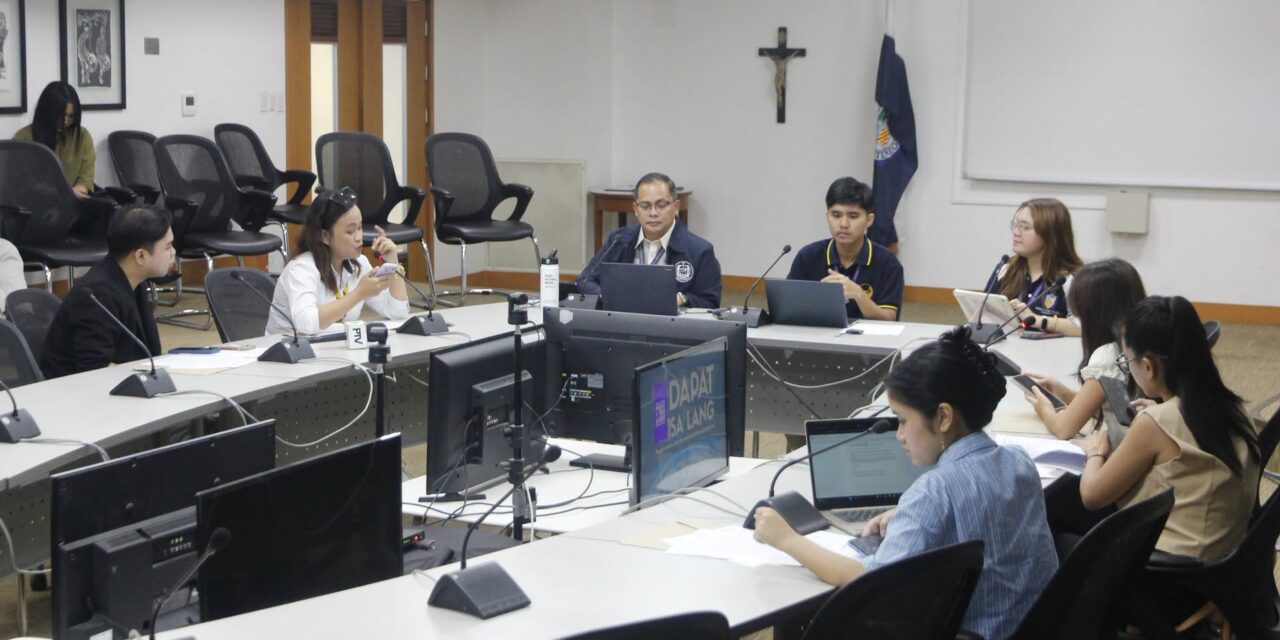
The Dapat Isa Lang (D1L) Movement relaunched its campaign in Davao City on Wednesday, shifting from manual signature collection to an online petition, with a local target of 110,000 signatures in support of a genuine anti-political-dynasty law.
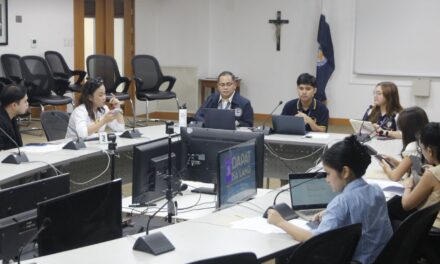
The relaunch was announced at a press conference at the Pakighinabi Room, 3rd Floor, CCFC Building, Ateneo de Davao University. The event discussed the campaign’s renewed efforts, the significance of its signature target, and the role of public participation in advancing legislation against political dynasties.
A call to young citizens
SAMAHAN President Mickyla Loriene Almadin opened the program by restating the movement’s principles. She said public service should be open to everyone, and that public office is a public trust that should never be treated as an inheritance.
Ms. Almadin pointed out that the Philippine Constitution has long mandated the prohibition of political dynasties, stressing that fulfilling this mandate requires meaningful legislation to address the concentration of political power in families. “Hindi sapat na may batas lang,” she said, highlighting that the real question is whether a law would uphold equal access to public service.
She also underscored the stake of young people in the issue. “As students and young citizens, we have a stake in the future of our country’s political system,” Ms. Almadin said. “This political reform should not be treated as an issue that concerns politicians alone.”
She added that democracy “requires more than choosing our leaders during elections” and called for an informed citizenry that continues to hold institutions accountable. The campaign’s slogan is “Dapat isa lang, para iba naman.”
How to join
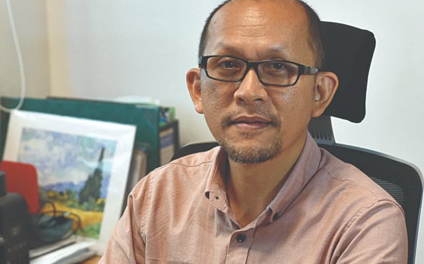
Atty. Romeo “Meong” Cabarde Jr., the Director of the Ateneo Public Interest and Legal Advocacy Center, discussed the digital campaign and how the public can take part. Participants need their registered voter information (barangay, province or city, region, and municipality), a blank sheet of paper, a handwritten signature, a phone or computer with internet access, and a clear selfie holding the signed paper.
The process has five steps: visiting the D1L website and reading the petition, preparing a signature, completing identity and voter details, reviewing and consenting before submitting, and keeping the confirmation and UUID. The campaign summarizes this as “Read. Understand. Sign. Submit. Keep Your UUID.”
Why the shift to the digital approach
Atty. Cabarde said many Filipinos are already connected to the internet and own smartphones, which lets the movement reach and inform more people.
He said the June launch is not different from the relaunch but is “a level up.” The June effort began with traditional, manual signatures, but the national secretariat later found a digital approach faster and more efficient. Atty. Cabarde acknowledged that the manual signatures collected in June will not be counted and encouraged those who signed to sign up again online so their support can be counted toward the bill’s passage.
National and local targets
Atty. Cabarde said the effort is nationwide, and Davao’s campaign contributes to it. The national secretariat’s target is 500,000 signatures, of which Davao City aims to gather 110,000, which it hopes to reach by January 2027. The signatures will be submitted to the Commission on Elections (COMELEC) for verification.
He added that the movement is not only gathering signatures but also raising awareness of the problem of political dynasties. It is intensifying political education campaigns, particularly in universities, where it has already conducted training-of-trainers for faculty, students, and non-teaching personnel, who served as volunteers.
Respecting voters’ choices
Atty. Cabarde said the movement respects those who still support the political families that currently govern them. He said the campaign is simply fulfilling the constitutional mandate to prohibit political dynasties, as it seeks to regulate by limiting the choices of leaders who may belong to a dynasty, while preserving the people’s democratic right to choose their leaders.