


Universities, Partners Commit to Local SDG Action at ADDU-Hosted Roadshow
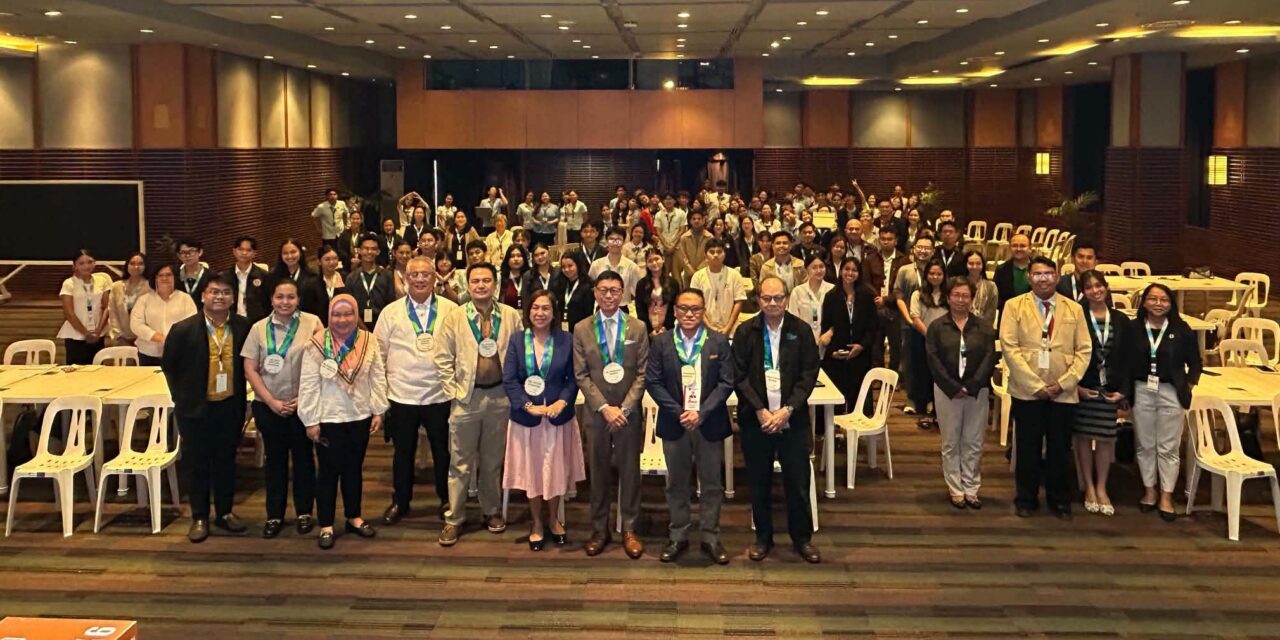
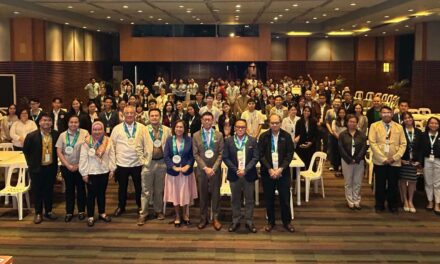
Ateneo de Davao University, as the host school, welcomed the Mindanao Roadshow: Localizing SDG Catch-ups, organized by the Sustainable Development Solutions Network (SDSN) Philippines on 6 October 2026 at the Finster Auditorium, Jacinto Campus. The gathering brought together universities, government agencies, civil society, and youth to turn the Sustainable Development Goals (SDGs) into concrete local action.
The roadshow was co-organized by De La Salle University, ADDU, the University of Southeastern Philippines (USeP), and Davao del Sur State College (DSSC). Ateneo de Davao’s Community Engagement and Sustainable Development Office (CESDO) led the event.
Global goals, local roots
Fr. Antonio Basilio, SJ, PhD, Vice President for Research, Innovation, and Community Engagement (RICE), welcomed participants from partner institutions and sectors. He described the SDGs as a guiding framework and localization as the means of connecting that framework to communities.
“Global goals must take root in local lives,” Fr. Basilio said. He added that education plays a central role in this work, as “universities form graduates who understand that their expertise carries responsibility to society.” He called the gathering an opportunity to identify where the strengths of the participating institutions meet and what they can accomplish together.
From a decade of engagement to concrete action
Dr. Francisco A. Magno, chair of the SDSN Philippines National Leadership Council and director of the De La Salle University Jesse M. Robredo Institute of Governance, presented the Chair’s Report, “Sustainable Development: A Decade of Meaningful Engagement.” He outlined the network’s membership, governance, and flagship projects on SDG localization, Education for Sustainable Development, and Carbon Neutrality, alongside efforts to advance SDG 2: Zero Hunger.
Regional roadshows like this one, Magno said, continue to widen engagement, and the network will prioritize its programs, knowledge sharing, and communications and visibility.
In a recorded message, Mr. Arnaud Peral, United Nations Resident Coordinator in the Philippines, noted that development is felt unevenly across the country. “Progress is different depending on where you live,” he said. He urged participants to move from discussion to delivery. “Be the conveners and agree on something concrete to deliver,” he said. “There’s a lot of speech, but the power of action has to be at the center.”
Panels on localization
Two panel discussions explored how the SDGs can be brought closer to communities.
The first, “Universities as Drivers of SDG Localization,” featured leaders from ADDU, DSSC, and USeP. Dr. Fuentes, President of DSSC, said localization is not a separate program but is institutionalized in the university’s core functions, from teaching and experiential learning to research aligned with national, regional, and local agendas.
Fr. Basilio said ADDU’s teaching is tied to community engagement and informed by research, which is itself increasingly rooted in community experience.
Dr. Gabales, President of USeP, said the university began mapping the SDGs across all its courses and programs last year, aiming to make the goals personal and reflected in its actions, “not just put on record.”
The second, “SDG Localization and Innovative Partnership Models,” featured representatives from civil society, DEPDev Region XI, and SDSN Youth Philippines. Ms. Raisza Mae “Bai” Anatayin, Executive Director of the Mindanao Coalition of Development NGO Networks, named SDG 16 (peace, justice, and strong institutions) as the most impactful goal, saying progress should be measured by how communities develop and how safe they feel. She added that marginalized groups should be included in mainstream planning and implementation.
Ms. Meg Badilles-Manayan, Senior Economic Development Specialist of the Department of Economy, Planning, and Development (DEPDev) Region XI, said planning involves a multi-stakeholder approach at every step, bringing together the private and public sectors through the Regional Development Council, with women and Indigenous Peoples represented through bodies such as the Regional GAD Committee.
Ms. Rafaella Justine Marie Villena, Network Coordinator of SDSN Youth Philippines, said the most promising initiatives link global and local frameworks, such as the 2030 Agenda and the Philippine Development Plan. Citing SDG 17 (partnerships for the goals), she said young people will keep building partnerships with youth organizations and other actors and are well positioned to reinforce programs and projects.
Commitments for Mindanao
The roadshow closed with the Mindanao Roadshow 2026 Statement, delivered by Dr. Fuentes, and a commitment signing on the Local SDG Action Wall, a concrete step toward the delivery Peral called for. These followed afternoon small group discussions, where participants presented their group outputs. Dr. Gabales gave the closing remarks.
The program also formally welcomed new SDSN Philippines members, with certificates presented to Fr. Basilio of ADDU; Dr. Fuentes of DSSC; Dr. Gabales of USeP; Mr. Julie Ar E. Sibala of the University of the Immaculate Conception; and Rizalyn Bustaliño of Philippine Business for Social Progress.
The Davao leg is the third in SDSN Philippines’ series of national roadshows, following Iloilo in October 2025 and Naga City in April 2026. The series brings universities and development stakeholders together to advance SDG localization across the country.