

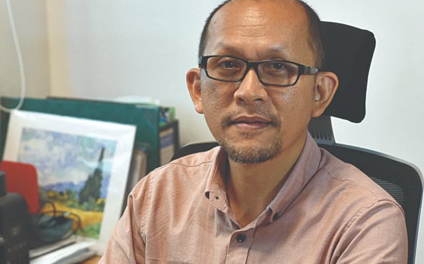

Former Ambassador Angeles Launches Book on Asia-Africa Trade at Ateneo de Davao
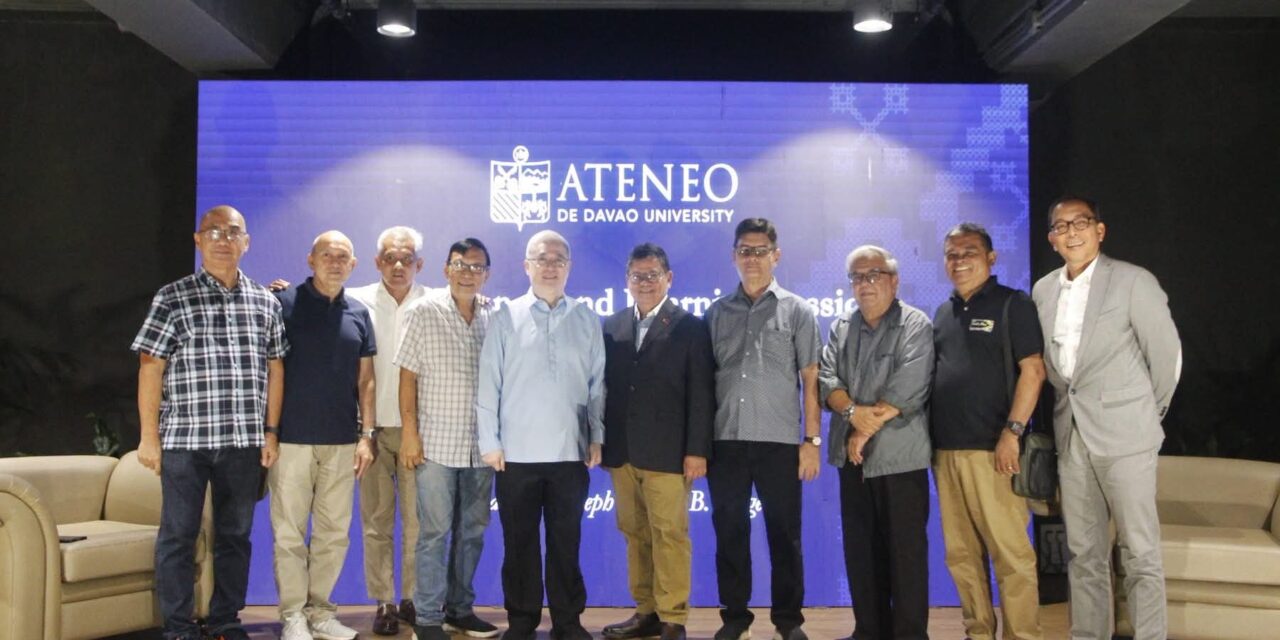
On the 16th of September 2026, Former Philippine Ambassador Joseph Gerard B. Angeles returned to his alma mater on Wednesday to launch his book “Divergent: The Trade and Development Experience of Asia & Africa,” arguing that trade, not domestic manufacturing, accounts for roughly 95% of the goods Filipinos consume daily, by his own estimate.
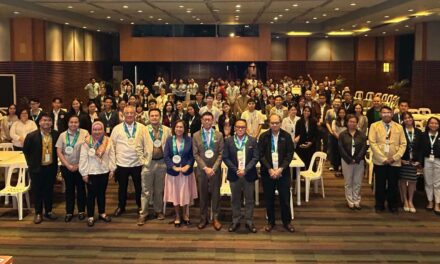
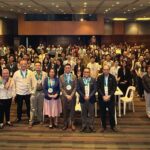
The launch, held at the Bapa Benny Tudtud Auditorium as part of Ateneo de Davao University’s Pakighinabi Conversation Series, was organized by the Ateneo Internationalization for Mindanao (AIM) Office, the School of Business and Governance (SBG), and the Ateneo College of Law.
University President Fr. Karel S. San Juan, SJ, welcomed Angeles, an Ateneo alumnus, economist, lawyer, and career diplomat, calling the event a homecoming. “A homecoming brings people together. It also creates space,” San Juan said, tying the occasion to the university’s mission of forming socially aware leaders. School of Business and Governance Dean Dr. Margie J. Clavano, CPA, introduced Angeles as the event’s speaker.
Trade as an engine of wealth, with limits
In his lecture, Mr. Angeles credited export-oriented manufacturing with propelling Singapore, Taiwan, South Korea, and Vietnam past the Philippines in wealth over the past two decades, pointing to sustained investment in workforce education as a way those countries compensated for limited natural resources.
Mr. Angeles said that the benefits of trade extend beyond cheaper goods to economies of scale, job creation, rising incomes, and technology transfer. However, he cautioned that natural abundance does not guarantee shared prosperity, describing a “curse of natural resources” in which the Philippines’ fertile land and mineral wealth have chiefly benefited a small elite due to weak regulation.
He also pointed to what he called “infant industries that never grow up,” citing vehicle manufacturing under the country’s import-substitution policies since the 1980s, where government subsidies meant to build competitiveness instead left the sector uncompetitive and confined to the domestic market.
He was equally direct about trade’s downsides, which are unequal gains between trading partners, job losses in displaced sectors, labor exploitation, environmental damage, cultural homogenization, and the risks of economic dependency and foreign political leverage.
“International trade is a double-edged sword,” Mr. Angeles said. “It can create prosperity, jobs, and innovation, but it can also cause inequality, dependency, and environmental harm if not managed wisely.”
Local reaction
In response to the lecture, Dr. Mirasol B. Tiu, president of the Davao City Chamber of Commerce and Industry, Inc., said the book “brings a unique perspective” to trade and development discussions, linking its arguments to Davao City and Mindanao’s priorities for building an adaptable workforce. “The mandate is clear that we should be built for resilience and the people for readiness,” she said.
Dr. Renante D. Pilapil, Vice President for Higher Education, delivered the closing remarks, framing trade as a force that opens markets but cannot be considered apart from questions of governance and sustainability. “International trade can open markets. Trade does not stand only in isolation,” Pilapil said.
The event closed with a book signing and cocktail reception at Arrupe Hall.