


ADDU Ranks No. 1 in Davao Region in Sept 2026 Social Work Licensure Exam
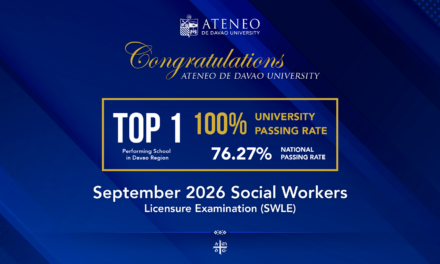
Ateneo de Davao University (ADDU) ranked first in the Davao Region in the September 2026 Social Workers Licensure Examination (SWLE), earning recognition as a Top Performing School among institutions with 10 to 50 examinees and a passing rate of 100%.
The School of Arts and Sciences, through its Department of Social Work, produced 18 new licensed social workers after every examinee from ADDU passed. That is a 100% passing rate, compared with a national passing rate of about 76.27%, as 8,383 of 10,991 examinees passed.
The Professional Regulation Commission (PRC) and the Board for Social Workers administered the examination from 9 to 11 September 2026, in testing centers across the country, including Davao, with results released on September 16. Among schools with 10 to 50 examinees, ADDU’s 18 of 18 passers placed it among the institutions that cleared every one of their takers.
The result adds to the Social Work Department’s record in the licensure examination. The program has built a track record of producing licensed professionals from Mindanao for the field.
The University extended its gratitude to School of Arts and Sciences Dean Dr. Nelly Z. Limbadan, RPsy, RPm, CSCLP; Social Sciences Cluster Assistant Dean Dr. Jerome A. Serrano; and Social Work Department Chairperson Dr. Leah Mae Jabilles-Evasco. The community also thanked the faculty, staff, and students whose guidance and support made the milestone possible.