


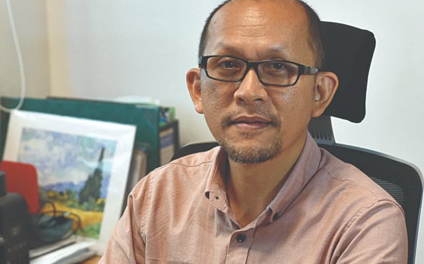

Establishment of CESDO and Appointment of Mr. Mark Paul Samante as Director
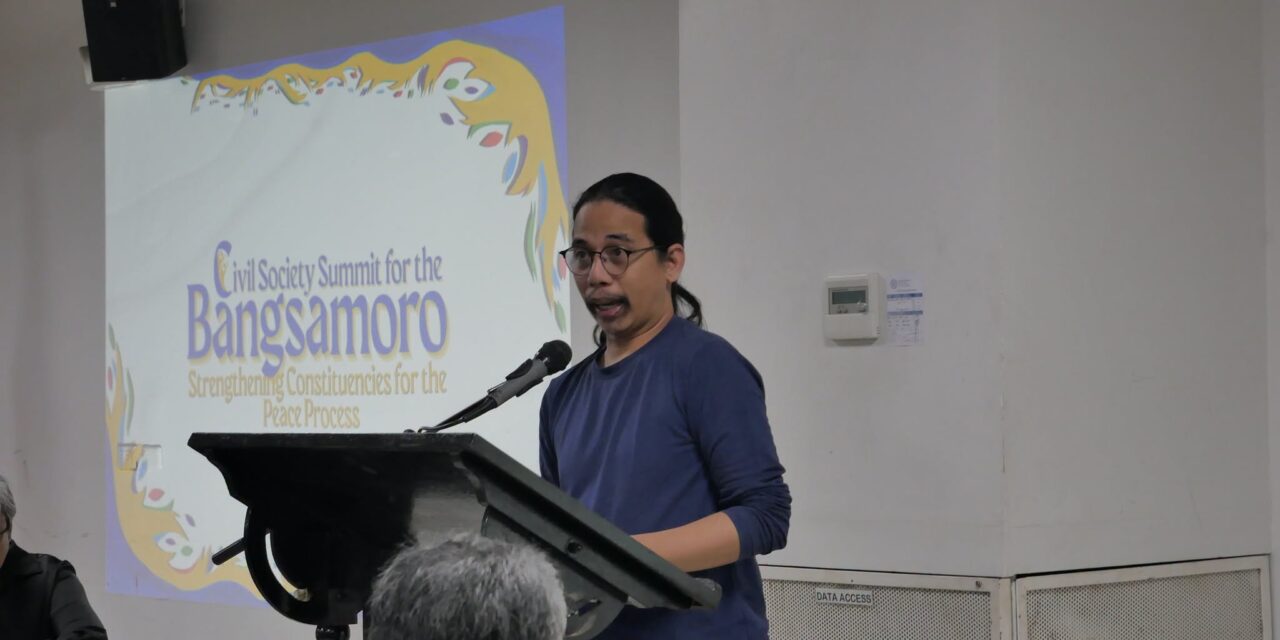
Upon the recommendation of Fr. Antonio M. Basilio, SJ, Vice President for Research, Innovations, and Community Engagement, Ateneo de Davao University is pleased to announce the establishment of the Community Engagement and Sustainable Development Office (CESDO).
Effective 01 June 2026, the new office operates under the direct supervision of the Office of the Vice President for Research, Innovations, and Community Engagement.
Likewise, the Ateneo community warmly welcomes Mr. Mark Paul O. Samante as the Director of the Community Engagement and Sustainable Development Office (CESDO), effective 01 June 2026 to 31 May 2029.
Having previously served as the Chair of the University Community Engagement and Advocacy Council, Mr. Samante brings extensive experience to this leadership role. This background will guide the continued advancement of the university’s engagement mission across Davao City and Mindanao.
On the Strategic Mandates and Scope of CESDO
CESDO will lead and coordinate the University’s community engagement, extension, and development initiatives, ensuring that all engagement activities are participatory, innovative, sustainable, and aligned with social justice, development goals, and the United Nations Sustainable Development Goals (SDGs).
The Office coordinates community extension and engagement programs across all University units; supports partnerships with communities, civil society organizations, and development agencies; integrates community engagement with instruction and research, and supports service-learning and community-based learning initiatives. The following existing University programs are hereby subsumed under CESDO and shall operate as programs of this Office:
The Malnutrition Intervention Alternatives (MIA) project addresses hunger and malnutrition in Mindanao by producing an affordable micronutrient powdered mix sourced from local farmers for feeding programs serving underweight children in Davao City. Its “Duyog” component provides nutrition and food preparation training for children with severe and moderate acute malnutrition.
Ecoteneo develops environmental consciousness among the ADDU community as expressed in behavior and habits, and advocates for changes in campus systems, structures, policies, and engineering toward greater ecological responsibility.
The Madaris Volunteer Program (MVP) deploys volunteers to Integrated Pilot Madaris (plural of Madrasah, Islamic schools) in the Bangsamoro Autonomous Region in Muslim Mindanao to improve educational quality and engage partner communities in interreligious and intercultural dialogue through capacity enhancement training, scholarships, and donation drives.
The Ateneo de Davao University Shoe Academy (ASA) provides training and livelihood opportunities for the local community through shoe craftsmanship and design.
On Organizational Alignment and Structural Transitions
Concurrent with this establishment, the community engagement coordinators currently assigned to Basic Education units are hereby designated as CESDO coordinators for their respective units. They will carry out their coordination functions under CESDO’s policies and mechanisms, with functional reporting to the CESDO Director, while remaining embedded in their units and retaining their administrative reporting line to their respective school principals.
This designation clarifies the reporting and coordination line for community engagement work in Basic Education, and is not to be confused with the Arrupe Office of Social Formation of the Higher Education units, which is a distinct office with its own mandate and continues to operate independently. CESDO and the Arrupe Office of Social Formation share a common concern for justice, service, and formation, and are expected to collaborate where their programs and constituencies converge, including in service-learning, community immersion, and advocacy initiatives. The two offices will work out the modalities of this collaboration in coordination with the Vice President for Research, Innovations, and Community Engagement.
The University Community Engagement and Advocacy Council (UCEAC) is likewise abolished. Its integrative function is assumed by the RICE Council, which will operate under the Office of the Vice President for Research, Innovations, and Community Engagement.
The university community extends its gratitude to the past and present members of the University Community Engagement and Advocacy Council, whose collective work over the years has strengthened the University’s presence in and commitment to its communities.