Select Page


SBG Journal

Journal of the School of Business and Governance

About the Journal

The School of Business and Governance (SBG) Journal of Ateneo de Davao University is an online, open access journal that aims to publish studies and literary work that capture diverse issues in business.

Forging Leaders     Uniting Disciplines     Shaping Global Impact

The Ateneo de Davao University School of Business and Governance fosters a dynamic environment for responsible, humanistic business education and research, aiming to match global standards in teaching and scholarship.

With strong faculty expertise, industry linkages, and programs in business, accountancy, and support services, it develops competent, service-oriented professionals and strives to be a center of excellence in business.

VOLUME 1 ISSUE 1 January 2026
Get the full viewing experience of the Issue here.

FOREWORD

Our editorial and review process is guided by the values of rigor, relevance, inclusivity, and integrity. This inaugural issue highlights timely themes such as sustainability, community development, work readiness and career preparation, financial literacy, human resource management, and public-private and academe partnerships.

For this issue, we have a total of six research articles and two special articles. These submissions are a mixture of studies from the undergraduate students, faculty, and industry practitioners.

Target Readers

Students for both graduate and undergraduate programs, practitioners in the area of business and governance, business organizations, industry partners, and other stakeholders that may benefit from the submitted empirical research.

Call for Papers

The submission of manuscripts is done year round, with individual manuscripts being processed as they come.

Publication Schedule

The journal publishes semiannually, every January and July of each year. All applications are free of charge.

The focus of the journal covers the following areas:

  • Business management
  • Human resource and development
  • Finance
  • Accountancy 
  • Public governance
  • Corporate leadership
  • Entrepreneurial activities
  • Social enterprises
  • Other business and governance related topics

The platform serves as an avenue for the publication of empirical studies, guided by the standards set by the Editorial Board. While it provides opportunities for employees, faculty, alumni, and students of Ateneo de Davao University to share their research, it also welcomes submissions from researchers and scholars outside the University.

The main purpose of the SBG Journal is for knowledge dissemination and expanding research opportunities on varied topics in business and governance. 

The journal implements a double blind peer review process. Peer reviewers are carefully selected following the criteria set by the Editorial Board.

  1. Submitted applications will be forwarded to a screening committee who will review the format, structure, and quality of submitted paper.
  2. The Screening Committee (SC) will be headed by the Editorial Board. 
  3. The SC will be tasked to assign applications for publication to peer reviewers.
  4. Double blind review will be employed.
  5. The Managing Editor will email the author(s) for initial feedback and any other information that the reviewer may require.
  6. Authors are given time to revise submitted manuscripts.
  7. Managing editor sends the revised manuscript back to the reviewers for their approval. Once the manuscript has been cleared for publication, this will be communicated to the authors. Otherwise, the manuscript will be sent back to the authors for further revisions.

Authors are required to observe the following in the submission of manuscripts, articles, or other literary works:

  • Type of Research: Qualitative, quantitative, or mixed-methods.
  • Submitted manuscript must not be published in another journal and/or waiting for approval for publication from another journal
  • Topic of interest must be related to the focus of the journal
  • Study must be done within the last 5 years depending on the relevance of the topic
  • Format of manuscript 
    • Word format using the format prescribed by the SBG Journal EB
    • Must contain the following sections: Abstract, Introduction, Methods, Results and Discussion, Appendices, References
    • Tables and figures must be written within the text and must be chronologically labelled.
    • Length : 6,000 to 10,000 words.  
    • Spacing: Single 
    • Font size: 11 
    • Font type: Times New Roman
    • Abstract should not exceed 150 words 
    • Keywords must be 3 to 5 words
    • Name(s) of author(s) must be arranged according to the amount of contribution to the completion of the manuscript
    • References must follow the latest APA format
    • All submission must be done through the SBG website
  • Must undergo similarity and AI detection checks ( S.I. of not more than 20% and A.I. of not more than 10%)
  • Ethics Policy

Author(s) must  adhere to the ethical guidelines and standards of the AdDU UREB that includes but not limited to:


  • Permissions for using other authors’ data, figures, tables, and other similar information
  • Informed consent when applicable
  • Outside funding
  • Others that may be required by the UREB
  • Call for Application

Call for publication will be made through the SBG website every July and February of the year. The submission is open for 30 days and will close at 12:01 am on August 1 and March 1.

  • Manuscript Submission

Manuscript submission implies that the author accepts full responsibility for the truthfulness of information and other data in the manuscript. It also implies that the manuscript has not been published anywhere else at the time of application for publication or waiting for approval for publication from another journal. The publisher shall not be held responsible, legally or otherwise, for claims in the form of compensation or otherwise, for published materials.

  • Manuscript Requirements

Authors are required to observe the following in the submission of manuscripts, articles, or other literary works:

  • Type of Research: Qualitative, quantitative, or mixed-methods.
  • Submitted manuscript must not be published in another journal and/or waiting for approval for publication from another journal
  • Topic of interest must be related to the focus of the journal
  • Study must be done within the last 5 years depending on the relevance of the topic
  • Format of manuscript 
    • Word format using the format prescribed by the SBG Journal EB
    • Must contain the following sections: Abstract, Introduction, Methods, Results and Discussion, Appendices, References
    • Tables and figures must be written within the text and must be chronologically labelled.
    • Length : 6,000 to 10,000 words.  
    • Spacing: Single 
    • Font size: 11 
    • Font type: Times New Roman
    • Abstract should not exceed 150 words 
    • Key words must be 3 to 5 words
    • Name(s) of author(s) must be arranged according to the amount of contribution to the completion of the manuscript
    • References must follow the latest APA format
    • All submission must be submitted to sbg.journal.me@addu.edu.ph
  • Must undergo similarity and AI detection checks ( S.I. of not more than 20% and A.I. of not more than 10%)
  • Submission instructions

To submit, please follow the following steps:

  1. Go to SBG Journal website (insert website address). 
  2. Author(s) may submit up to 3 manuscripts per cycle.
  3. The author(s) should declare any conflicts of interest and sources of funding
    1. Upload declaration of truthfulness and originality of submitted manuscript duly notarized*
    2. Provide author details including full name, contact details, affiliation, highest degree earned, ORCID details ( if applicable)
    3. Submit Abstract
    4. Submit full manuscript
    5. Inquire status of application
    6. View citations for publication

ETHICS POLICY

Author(s) must  adhere to the ethical guidelines and standards of the AdDU UREB that includes but not limited to:

  • Permissions for using other authors’ data, figures, tables, and other similar information
  • Informed consent when applicable
  • Outside funding
  • Others that may be required by the UREB

Latest Journals

Discover bold ideas and transformative insights in the official journal of Ateneo de Davao University’s School of Business and Governance—where rigorous research meets real-world impact. Each issue showcases visionary thinking, ethical leadership perspectives, and innovative solutions shaping the future of business and society.

An Ex-Ante Study of the Proposed Waterfront Development of the Sta. Ana Port from the 25-Year Davao City Tourism Master Plan Phase 1

Llomar Encenso Aguanta, Michelle Angela Haum Moreno, Marvic Loi Fuentes Landong, John Carlo Tagabunlang Barquin, and Chrystophyr Balsamo Trance

This study explores the proposed waterfront development from the ambitious yet promising 25-year Davao City Tourism Master Plan’s (DTMP) Phase 1 project in Sta. Ana, Barangay 27-C, Davao City. The master plan aims to make the city’s unique identity in promoting sustainable tourism development. Researchers sought to integrate Social, Economic, and Environmental development facets and the Mazmanian-Sabatier Implementation Model to identify the possible outcomes of the project while addressing its encumbered practical, stakeholder, and contextual gaps, and the absence of a related study. As this study employed a qualitative descriptive design while using Creswell’s Thematic Analysis, findings revealed the need for stronger grassroots engagement, a comprehensive governance framework, and continuous monitoring of statutory and non-statutory factors. Beyond that, this study champions participatory governance and research-driven collaboration to position Sta. Ana’s proposed waterfront development as both a local and global exemplar of sustainable tourism development.

Implementation of Municipal Ordinance No. 425, Series of 2019 (The Use of Proper Reusable Cups/Glasses) in the Municipal Government of Bansalan, Davao del Sur

Bea Eloisa B. Balunan

This quantitative study looks at the factors— (1) Information; (2) monitoring strategies; and (3) awareness of the existence of operational plans— that influence the implementation of the Municipal Ordinance No. 425, Series of 2019 in the Municipality of Bansalan, Davao del Sur. This study was anchored on Edwards III’s Policy Implementation Model, which asserts that factors (communication, resources, disposition, and bureaucratic structure) influence the extent of implementation. The respondents in the study were establishment owners in the municipality’s public market affected by the ordinance, to whom survey questionnaires were distributed. The respondents are the establishment owners reflected in the masterlist given by the Local Economic Enterprise Management Office, specifically from the grocery section, eater/carenderia, bakeshop, softdrinks retailer and refreshment. The results show that the level of implementation of the ordinance is high. However, it is not fully implemented due to factors such as a lack of consistency of implementation, which can be attributed to the lack of monitoring strategies. Indeed, the extent of implementation is influenced by the three specific factors focused on in this study.

The Influence of CSR Practices on the Members’ Commitment in Selected MPC in Davao City

Shinily Faith H. Agbon, Dazzel A. Anacio, Minette Paula A. Duga, Marielle O. Rico, Mharianne M. Vinculado, and Lovely V. Paasa

Cooperatives face challenges related to weak collaboration and cooperation among members, which hinder their primary purpose in the community’s sustainable development. This research aimed to determine the influence of two CSR practices—economic and philanthropic responsibilities—to the members’ commitment in selected multipurpose cooperatives in Davao City. Grounded in the Pyramid of CSR and Organizational Commitment Theory, this quantitative descriptive-correlational study involved 155 regular members of three selected cooperatives. Using purposive sampling, data were gathered through survey questionnaires and analyzed using IBM SPSS and Jamovi. The findings indicated a significant relationship between CSR and members’ commitment. The findings also indicated that both CSR practices significantly influence members’ commitment, as evidenced by the R² of 0.633 and p-value of 0.000. It is recommended that cooperatives conduct member-centric CSR planning, enhance financial accessibility, and conduct long-term CSR impact analysis. Future research may explore other aspects of CSR within the multipurpose cooperatives context.

Influence of Needs Satisfaction from Organizational Affiliations on the Perceived Work Readiness of Graduates in the Accountancy Cluster of Ateneo De Davao University

Joanna Danielle G. Ang , Pam Danica L. Dy , Camille Kate Manalastas, John Paul D. Sapsal , Trisha L. Yu , Jabez Tyron L. Yu, and Bai Charity P. Pandita

A descriptive-correlational quantitative design was employed to determine how needs satisfaction from organizational affiliations influences the perceived work readiness of 202 Accountancy Cluster graduates from Ateneo de Davao University from 2022-2023. Most respondents were affiliated with academic clubs and employed in commerce and industry. Perceived work readiness was high, with graduates showing moderate satisfaction in their needs for achievement and affiliation. Multiple regression indicated that only needs for achievement and affiliation significantly influenced work readiness. Moderation analyses using Hayes’ PROCESS Macro indicated that the predominant organizational role significantly strengthened the relationship between both achievement and affiliation satisfaction and work readiness, whereas the type of organizational affiliation did not. These results highlight that focus should not only be on academic performance but also on opportunities for self-achievement and interpersonal development to enhance work readiness in the Accountancy profession. These inferences should be interpreted cautiously given indications of heteroscedasticity, which may affect conventional OLS standard errors and significance tests.

Parenting Styles and Financial Literacy in the Philippine Context: Insights from Ateneo de Davao University

Jem Kimberly R. Obenza, Jefrey T. Labasan, Mariah Coleen D. Panagdato, Carlos A. Dagohoy, Nash Terron A. Garcia, and Cleofe Arib

Financial literacy is crucial for young adults, yet many young Filipinos struggle with saving, budgeting, and long term financial planning. Since much of the financial learning comes from home, parents influence their financial management through their parenting styles, authoritative, authoritarian, or permissive. This study aimed to determine how one’s perceived mother and father’s parenting style affect their financial literacy levels. The researchers employed a quantitative descriptive causal-comparative method; data was gathered from a total sample size of 170 undergraduate students at Ateneo de Davao University through a Poisson distribution sampling, in which students are chosen randomly and had a fixed chance of being selected. Data collection involved a combination of standardized and validated questionnaires where it utilized Google Forms. Data results showed that the majority of the respondents perceived both their mothers and fathers as having an authoritative parenting style. Most of the respondents were female, belonged to the School of Business and Governance, classified as Christians and lived in a household size containing 3-4 members. Respondents demonstrated high financial knowledge, behavior, and well-being scores indicated young adults’ progressive understanding of finance. One-way ANOVA was conducted to determine if there was a significant difference between the variables. Findings revealed no statistically significant difference in financial literacy levels based on their parents’ parenting style, suggesting that financial literacy among young adults may be shaped by several external factors rather than parenting styles alone. The study suggests that future studies should examine other influential and external factors, such as socioeconomic background, school-based financial programs, or peer influences.

Factors that Contribute to the Auditors’ Likelihood to Stay in the Top 3 Audit Firms in Davao City

Jerachris Megaela Rosal, Rhyann Maverick Tejero, Shobe Ybañez, Edrian Louis Nabos, Jimmy Mulato, and Al-Muareef Karim

This study explored the factors influencing the likelihood of auditors to stay in the top three audit firms in Davao City: Isla Lipana & Co., P&A Grant Thornton, and SGV & Co. Six factors from Herzberg’s Two-Factor Theory were investigated: Recognition, Advancement, The Work Itself, Salary (Motivators), and Working Conditions, Salary, and Job Security (Hygiene Factors). Using a descriptive-correlational research design, the data were collected from 103 CPA auditors employed by the specified firms. Statistical tools that were utilized are as follows: Arithmetic Mean, Standard Deviation, and Multiple Regression Analysis Results showed that among Motivators, only Advancement significantly impacted auditors’ likelihood of staying. Among the Hygiene Factors, only Salary notably reduced job dissatisfaction and increased the likelihood of staying. This study provided insights for Davao City’s top three audit firms to improve retention strategies by addressing predictors of the likelihood to stay: Advancement (Motivator) and Salary (Hygiene Factors).

INDUSTRY INSIGHTS

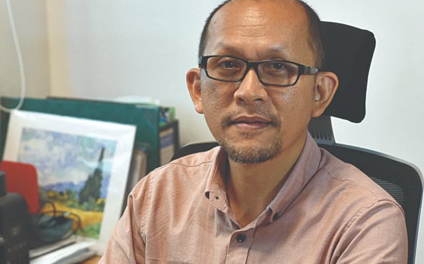
Bridging the Gap Between Academia and Industry Needs

Dr. Rosame D. Rentuma, FPM, CHRP
Sr. Manager, Country HR Business Partner and Global Learning and Development Del Monte Fresh Produce Philippines, Inc.

For decades, Human Resource (HR) practitioners and the academic sector have worked to bridge the gap between the supply ofqualified candidates and the evolving demands of the industry. However, simply achieving vertical alignment—where educationalattainment matches job requirements—is no longer sufficient to secure better opportunities within organizations.

Get the full viewing experience of the Issue here.

Questions?

Need assistance or clarification about the SBG Journal?
Reach out to us with your questions—we’re here to support you.

Pin It on Pinterest

Share This