







AdDU Signs Memorandum of Understanding with Unilab Education, Inc.
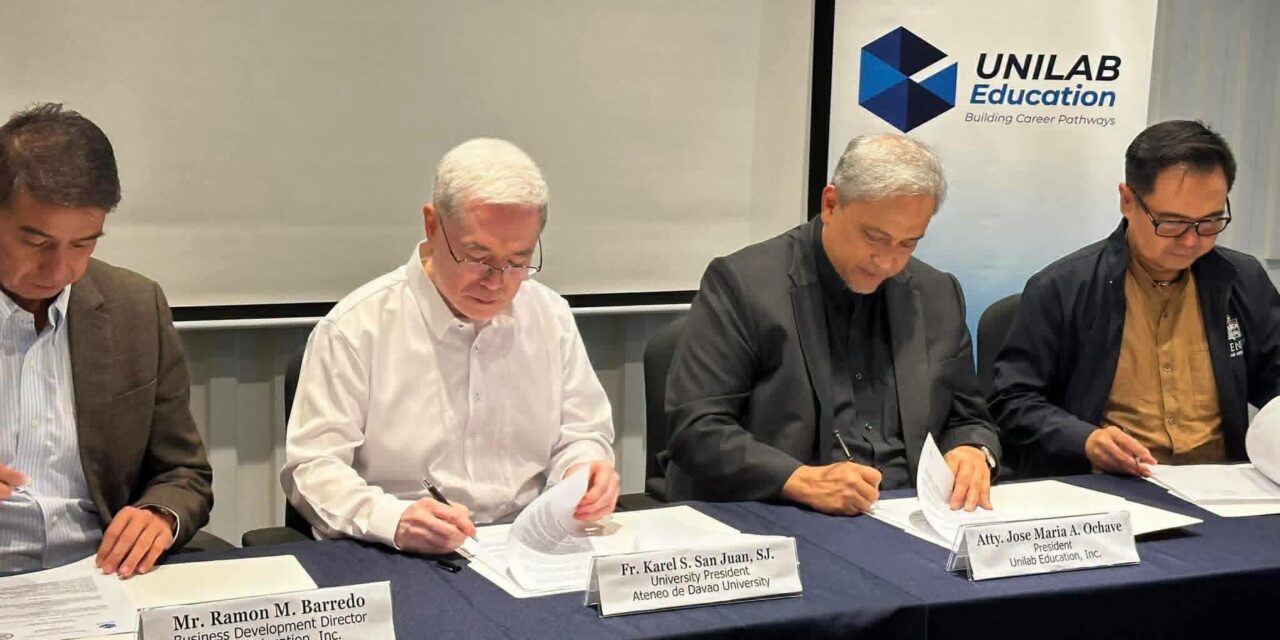
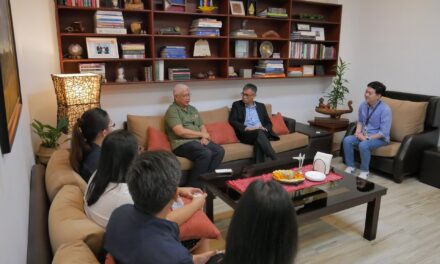
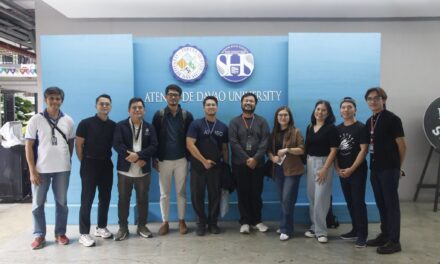
Ateneo de Davao University (ADDU) and Unilab Education, Inc. (UNIED) signed a Memorandum of Understanding on 10 June 2026 at the Unilab Corporate Center in Mandaluyong City, establishing a five-year framework for building a health workforce and innovation ecosystem in Mindanao.
University President Fr. Karel S. San Juan, SJ, signed on behalf of ADDU, while UNIED President Mr. Jose Maria A. Ochave signed for Unilab Education. Witnessing the signing were Fr. Antonio M. Basilio, SJ, ADDU Vice President for Research, Innovation and Community Engagement, and Mr. Ramon Miguel Barredo, UNIED Director for Strategic Partnerships. Also in attendance from ADDU were Mr. Jeremy S. Eliab, Vice President for Administration, and Dr. Liza G. Floresca, Dean of the School of Nursing.
The agreement responds to conditions that both institutions regard as pressing. Mindanao continues to experience shortages in healthcare professionals, limited access to professional specialization, and uneven health outcomes, particularly in underserved communities. The partnership seeks to address these conditions by linking education more closely to employment and directing research toward community health.
Under the MOU, the two institutions may collaborate across six areas: talent and workforce development through industry-informed academic programs and structured training pathways; professional specialization and certification, including stackable micro-credentials and industry-recognized certifications co-developed with UNIED; structured employment pathways linking education to the workforce; applied and translational research in areas such as child nutrition, community health delivery, and health product testing; laboratory and technical collaboration; and community-based health platforms grounded in underserved and high-need areas across Mindanao.
Through these areas of cooperation, ADDU’s health programs gain closer collaboration with industry. Students and working professionals may avail of training informed by actual healthcare and pharmaceutical practice and of clearer pathways from education into the health workforce, while the University gains an industry counterpart for applied research and support for laboratory and technical capacity.
The collaboration will unfold in phases. The first phase covers targeted, high-impact projects that can launch quickly on existing platforms, such as pilot programs and co-developed certifications. A second phase would consolidate these into an integrated system spanning academic programs, professional training, employment pipelines, and research. A third phase opens the possibility of a permanent institutional platform, which may include a dedicated health education or innovation institution or center.